Losing someone you love can be one of the most difficult experiences in life. During a time of grief, families may also need to make important decisions about funeral arrangements, often while feeling overwhelmed or uncertain about what comes next. Understanding the available options can make the process a little easier.
Direct cremation-northern-beaches’> cremation is one option that some families choose because it offers a simpler approach to saying goodbye. Learning how it works, what it involves and what choices may still be available can help you decide whether it is appropriate for your family.
What Is Direct Cremation?
Direct cremation is an arrangement where the deceased is cremated without a traditional funeral service taking place beforehand. Typically, there is no formal viewing, visitation or ceremony at the crematorium as part of the direct arrangement.
The person is transferred into the care of the funeral provider, the necessary paperwork and authorisations are completed, and the cremation takes place. The ashes are then returned to the family or handled according to the arrangements that have been made.
This approach can appeal to families who prefer a straightforward process or who want to hold a memorial service at another time and place.
Why Do Families Choose This Option?
Every family experiences loss differently, and there is no single right way to honour someone who has died. Some people prefer a traditional funeral with a formal service, while others may find comfort in keeping arrangements smaller and more private.
Direct cremation can give families flexibility. Without a scheduled funeral service immediately following the death, loved ones may have additional time to decide how they want to remember the person. A memorial gathering could take place weeks or months later, allowing family and friends to come together when they feel ready.
For some families, simplicity is also important. They may feel that a traditional funeral does not reflect the wishes or personality of their loved one. Others may appreciate having fewer decisions to make immediately after a loss, when emotions can make even simple tasks feel difficult.
What Does the Process Involve?
While specific arrangements can vary between providers and circumstances, the process generally involves several practical steps. These can include registering the death, completing required documentation, transferring the deceased into the funeral provider’s care and arranging the cremation.
Families should ask the funeral provider what is included in the service and which responsibilities they will need to manage themselves. It can also be helpful to ask about the timing for receiving the ashes and whether additional services are available.
Having these details explained clearly can provide reassurance during an emotionally challenging period. A reputable provider should be willing to answer questions patiently and explain each stage so that families understand what to expect.
Can You Still Have a Memorial?
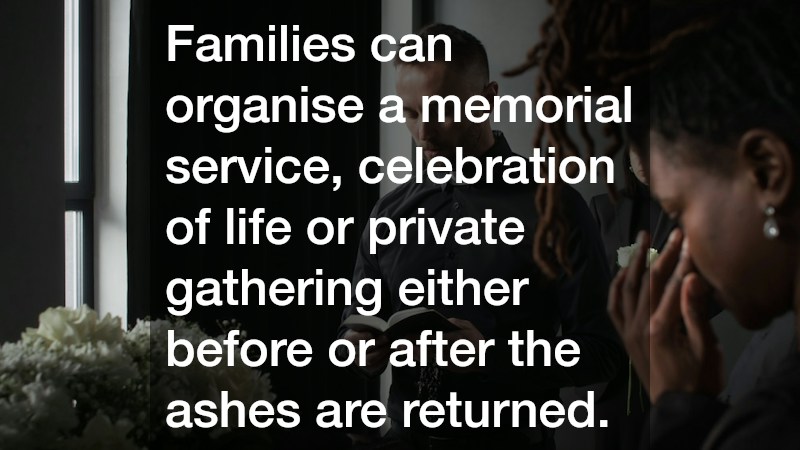
Choosing direct cremation does not mean you cannot have a meaningful farewell. Families can organise a memorial service, celebration of life or private gathering either before or after the ashes are returned.
Some people choose to gather at a favourite location, place photographs and personal belongings on display, share stories or simply spend time together. Others may prefer a quiet remembrance with only immediate family members.
There is no prescribed way to grieve or remember someone. What matters is creating a farewell that feels appropriate for the person who has died and the people who loved them.
Consider Your Family’s Wishes
Before making arrangements, take time to consider any wishes the deceased may have expressed. They may have discussed funeral preferences, written instructions or included relevant details in their estate planning documents.
It is also worth speaking openly with close family members when possible. People may have different expectations about how they want to say goodbye, and discussing those feelings can help avoid misunderstandings during an already difficult time.
A compassionate funeral professional can explain available options without pressuring you to choose a particular arrangement. Ask questions about costs, documentation, timelines and what happens to the ashes so you can make an informed decision.
Ultimately, cremation is a personal choice, and direct arrangements may provide families with simplicity and flexibility during a deeply emotional time. There is no perfect formula for saying goodbye. The most important thing is choosing an approach that respects your loved one’s wishes while giving your family the space and support it needs to grieve. Taking the time to make thoughtful decisions can help create a farewell that feels sincere, respectful and meaningful, even when the circumstances are difficult.